



The formation of a condominium budget, despite its seeming simplicity, is an intractable task for many Property Managers. I once wrote a training course for professional property managers in Bulgaria. It was based on my practical experience in the administrative management of complexes, expert activities, legal practice, and mediation experience in out-of-court dispute resolution, as well as materials from the article “Development of Law in the Context of Globalization.” I would like to share with you a part of this course related to the formation of a condominium budget, the principles and parameters of its formation, and the legal framework in the process of its application.
Despite the lack of legal capacity, a condominium has certain common property and, due to its functioning, adopts and executes an annual budget of income and expenses. Since the legal provisions on the condominium budget and the related financial relationships in the Condominium Management Act (CMA) are quite limited, many questions arise in practice, some of which we will examine below.
The presented reasoning is based on the application of the main form of condominium management – the general meeting.
- Posing the Questions
According to Article 11, Para. 1, Item 4 of the CMA, the general meeting of condominium owners adopts the annual budget of income and expenses and approves the annual reports of the management board (manager), as well as the control board (controller). The draft annual budget for the management, maintenance, and use of the common parts of the condominium and the annual plan for repairs, reconstructions, reorganizations, and other actions in the building, as well as the reports on their implementation, are prepared by the management board (manager) (Article 23, Para. 1, Item 4 of the CMA). At this, the description of the procedure for preparing, discussing, and adopting the annual condominium budget is exhausted.
In practice, however, the following questions arise:
What income and expenses should/can be included in the condominium budget?
Are there any restrictions/requirements when planning the income/expenses of the condominium budget (for example, the maximum amount of contributions for condominium owners)?
Should the chairperson of the management board present the draft annual budget when convening the annual general meeting of condominium owners?
What are the powers and obligations of the specialized bodies of the condominium that perform financial functions: the cashier, the control board (controller)?
The answers to these very questions will be examined in this article.
- Content of the Annual Budget
Only a budget content defined by law and adopted in accordance with procedural requirements can be applied to all owners, users, and residents of separate units (including those who voted “against” or abstained). Therefore, the answer to the question “What income and expenses can be included in the annual condominium budget?” is of paramount importance.
The condominium budget includes expected expenses and income related to the management, use, maintenance, and repair of the common parts of the building. First, let’s consider the expenses, as in practice, the usual way of forming a condominium budget is to first forecast the amount of expenses and only then, based on this assumption, determine the income – the contributions that the owners, users, and/or residents of separate units of the building will need to make.
2.1. Expenses
The following expenses can be included in the annual condominium budget:
2.1.1. Expenses for the management and maintenance of the common parts of the condominium (Article 48, Para. 8 of the CMA, Article 51 of the CMA).
According to Paragraph 1, Item 11 of the AP of the CMA, expenses for management and maintenance of common parts include:
The cost of consumable materials related to management.
This refers to consumable materials necessary for the exercise of the powers of the management board (manager), cashier, and control board (controller), including expenses for announcing, convening, and holding meetings of the general meeting of the condominium (for example, expenses for paper, printer, rent of a hall for a general meeting, etc.). The total amount of such expenses may have a limit up to a certain maximum amount established by a decision of the general meeting on the adoption of the annual condominium budget. I see no obstacles, in the presence of such a decision of the general meeting, to also include a one-time fee for a person performing the role of an accountant during the corresponding general meeting of the condominium owners. It is more difficult to justify transport expenses (including the purchase of vehicles) incurred by members of the condominium bodies, as it is assumed that they live in the building they manage.
Expenses for monetary compensation for the members of the management and control bodies and the cashier.
This includes:
Monetary compensation, as well as social security expenses, for the manager, members of the management board, and the cashier (according to Article 19, Para. 7 of the CMA: “By decision of the general meeting, the members of the management board (manager) and the cashier may be paid a fee.” The law allows for a hypothesis in which the manager is not paid a fee, but the cashier is), as well as;
Monetary compensation for the controller and members of the control board (according to Article 24, Para. 6, second sentence of the CMA: “By decision of the general meeting, the members of the control board (controller) may be paid a fee”). A decision of the general meeting of the condominium owners may relate to payments of both a one-time fee and a fee paid in certain periods of time: monthly, quarterly, annually, etc. In this regard, the CMA does not establish restrictions – the issue is decided by the general meeting of the condominium.
Expenses for electricity, water, heating, cleaning, elevator maintenance.
Although this list is specific, it is not exhaustive. In addition to expenses for lighting and heating (electricity, heating system, heat transfer system) of the common parts of the building, they also include: i) expenses for meeting the law’s requirements for fire safety; expenses for current repairs of the common parts of the building and replacement of facilities necessary for the use of the common parts (replacement of light bulbs, changing locks, making new keys for entry into common areas, replacement of entrance or transitional doors, replacement of tiles and floor coverings, windows, etc.); and expenses for a doorman – a feature of these expenses is that they are not subject to the possibility described in Article 51, Para. 2 of the CMA of exemption from payment for children under 6 years of age, as well as an owner, user, and resident living in the condominium for less than 30 days within a single calendar year (argument from Article 51, Para. 4 of the CMA).
Other expenses necessary for the management and maintenance of the common parts of the building.
This should include the fee for entrusting the activity of servicing and maintaining the common parts of the building to a legal or natural person. This can only happen on the basis of a decision of the general meeting of condominium owners under Article 11, Para. 1, Item 11 of the CMA. According to the specified provision, the general meeting of condominium owners can decide to entrust the activity of maintaining the common parts of the building to a legal or natural person for a fee, and also determine the specific powers of the management board (manager) that can be delegated for execution by these persons.
“Other expenses necessary for management” should also include the cost of consulting services (accounting, tax, legal, etc.), as well as possible legal costs and an attorney’s fee (expenses for legal consultations) when the condominium participates in legal proceedings – in cases where these expenses are incurred by the chairperson of the management board (manager).
According to Article 23, Para. 4 of the CMA, it is the chairperson of the management board (manager) who represents the condominium owners in court in lawsuits filed against them in relation to the common parts of the building (as a defendant), as well as in lawsuits filed against an owner, user, or resident who does not fulfill the decisions of the general meeting or their obligations in accordance with this law (as a plaintiff). In lawsuits against third parties, the chairperson of the management board (manager) represents the owners only if they are authorized by the general meeting. To cover legal costs when filing a lawsuit and/or using the services of an attorney to protect the interests of the condominium owners in court, a decision of the general meeting is required.
In cases where expenses are incurred by the chairperson of the management board (manager) without a decision of the general meeting of the condominium, but in compliance with the statute of limitations, the provision of Article 48, Para. 6 of the CMA can be applied: the expenses incurred by them are reimbursed by a decision of the general meeting or are offset against the contributions due from them after providing documents confirming the payments.
Expenses for the maintenance and use of the adjacent territory under Article 4 of the CMA.
Although these expenses are not included in the provision of Paragraph 1, Item 11 of the AP of the CMA, they can be assigned to the considered category of expenses for the management and maintenance of common parts, as although not being a common part of the building, the adjacent territory performs similar functions – it can be used by any owner, user, or resident to realize their right to the corresponding separate unit of the condominium.
Such expenses can be planned in the annual condominium budget only in the case when the adjacent territory has defined boundaries and purpose in accordance with the order and plan of the mayor of the municipality within the framework of Article 4 of the CMA.
Expenses for the management and maintenance of common parts, including the adjacent territory under Article 4 of the CMA, are covered by the owners, users, and residents of separate units equally in the form of monthly contributions in an amount determined by the rules of internal order or by a decision of the general meeting.
2.1.2. Expenses for the repair, renovation, reconstruction, and reorganization of common parts or the replacement of common installations and equipment (Article 48, Para. 3 of the CMA).
These expenses are distributed only among the owners of separate units (not among their users and residents) in proportion to their ideal shares of the common parts of the building.
Such expenses are planned in the annual condominium budget and are incurred by the chairperson of the management board (manager) only if there is a decision of the general meeting on the repair, renovation, reconstruction, and reorganization of common parts or the replacement of common installations and equipment.
2.1.3. Expenses related to the “Repair and Renovation” Fund (Article 50, Para. 2, Item 1 of the CMA).
Monthly contributions to the “Repair and Renovation” Fund are made only by the owners of separate units of the building. Their amount is determined by a decision of the general meeting in proportion to their ideal shares of the common parts of the building, but not less than one percent of the minimum wage in the country (the minimum contribution amount is determined for each individual owner, regardless of the size of their share of ownership of the common parts of the building).
The funds in the fund are collected in a special purpose account, which is opened in the name of the chairperson of the management board (manager). They can be spent on:
repair, renovation, reconstruction, and reorganization of common parts or replacement of common installations and equipment;
implementation of measures and instructions from the technical passport of the building, as well as on
other expenses determined by a decision of the general meeting (but even in these cases, they must be related to the repair or renovation of the building – in accordance with the name and target nature of the fund according to the provision of Article 50 of the CMA).
2.1.4. Expenses for making improvements to the common parts of the building.
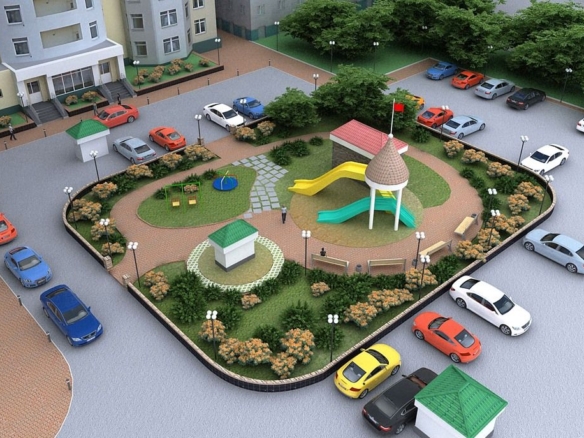
Such expenses can be provided for in the condominium budget only if there is a decision of the General Meeting on making such improvements, taken by a majority, but not less than 75% of the represented ideal shares of the common parts of the building (Article 11, Item 10, letter “a”, sentence 3 of the CMA, Article 17, Para. 2, Item 3 of the CMA). Expenses for making improvements include expenses for security (other than a doorman), video surveillance of the common parts of the building, construction of playgrounds on the adjacent territory, etc.
According to Paragraph 1, Item 12 of the AP of the CMA, useful expenses are expenses in connection with which the value of the building increases, in the case of reorganization and repair of common parts not provided for by law and not included in the expenses for necessary and urgent repair and renovation. For such expenses, special rules of the CMA are applied – they are distributed among the condominium owners depending on the size of their ideal shares of the common parts of the building.
Useful expenses should be distinguished from so-called luxury expenses. Luxury expenses are high-cost expenses that do not so much increase the value of the building as they satisfy some additional need not related to the purpose of the building (for example, expensive paintings in the corridors of the building). Such expenses can be planned in the condominium budget only in the case of a unanimously adopted decision by all condominium owners.
2.1.5. Expenses for servicing and repaying already taken loans in favor of the condominium.
Planning such expenses in the condominium budget is permissible only if there is a decision of the general meeting of condominium owners, taken by a majority, but not less than 75% of the ideal shares of the common parts (Article 11, Item 12, letters “a” and “b” of the CMA, 17, Para. 2, Item 3 of the CMA) for obtaining loans for necessary or urgent repairs, or for performing useful expenses.
In general, the condominium budget must fully comply with the already adopted decisions of the general meeting of condominium owners regarding the planning of actions that require certain expenses.
2.2. Income
Based on the listed planned expenses, the income for the condominium budget is also determined. Income may include:
2.2.1. Contributions made by owners, users, and residents – the amount and distribution depends on their type and purpose (as indicated above).
Of interest when determining this income is the question of the existence of a restriction regarding the maximum amount of contributions that can be determined by a decision of the general meeting of condominium owners for the adoption of the annual budget.
The law does not describe the maximum amount of contributions in relation to the condominium (but it does determine their minimum amount, and that is only in relation to the “Repair and Renovation” Fund). The general meeting of condominium owners is given the freedom to choose to make a decision on the amount of contributions based on the expected expenses of the budget. The amount of contributions is not arbitrary but depends on the planned expenses. Here we are talking about the targeted provision of funds that are collected to cover specific needs of the condominium.
When it comes to performing repairs or maintaining premises, the general meeting should also take into account market conditions. The costs included in the budget must meet the current market prices for the corresponding services. In this sense, there is a practice of providing at least three offers from different service providers to the general meeting by the management board (manager), and based on these offers, a decision is made on the amount of necessary expenses, respectively – and on the amount of contributions. Despite the widespread nature of this practice, it is the free will of the bodies of individual condominiums, as such requirements are not established by law.
It should also be borne in mind that the management board (manager) carries out its activities on a general basis – based on the gravity of the responsibility entrusted to it, it bears civil liability if its actions cause damage to the condominium owners. The activity of the management board (manager) is subject to control by the control board (controller), if such a body exists in the condominium.
2.2.2. Expected income from renting out the common parts of the building (Article 11, Para. 1, Item 10, letter “b” of the CMA), for example, from renting out the roof area of the building for the installation of technical facilities; from renting out common-use premises/facilities, etc., as well as from placing advertisements or technical facilities on the building (Article 11, Para. 1, Item 10, letter “d” of the CMA).
2.2.3. Expected income from the use of the condominium’s funds (property), for example, interest on bank deposits (including from the special purpose account according to Article 50, Para. 3 of the CMA), profit from investing funds in certain financial transactions – a possibility that is rarely realized and only if there is a decision of the general meeting of condominium owners.
Given the purpose and meaning of a condominium, its bodies, including the general meeting of condominium owners, cannot decide to purchase real estate with the goal of subsequently receiving income from it for the benefit of the condominium. The only real estate, the management and maintenance of which are entrusted by law to the condominium bodies, are the common parts of the building (including the land, if it is a common part related to the building). For this reason, expenses for the acquisition of other real estate cannot be included in the condominium budget, respectively – it is impossible to receive income from such property.
- Control over the Execution of the Budget
3.1. Draft Budget
The law does not have a direct requirement for the publication of the draft annual budget of income and expenses together with the notice of convening the annual general meeting of condominium owners. The idea is to determine the content of the budget precisely at the meeting. In practice, however, the draft budget, prepared in accordance with Article 23, Para. 1, Item 4 of the CMA by the management board (manager), is placed together with the notice of convening the general meeting. The reason for this is that on the basis of such a principle, each of the condominium owners can get acquainted with the proposals prepared by the management board (manager) in advance and take a more active and well-founded position during their discussion. In any case, the agenda indicated in the notice of convening the annual general meeting should include an item on the adoption of the annual budget of income and expenses for the condominium for the next year.
3.2. Bodies Responsible for the Execution and Control of the Condominium Budget
3.2.1. The execution of the already adopted condominium budget is entrusted to the management board (manager).
This is the very body that prepares the draft budget, carries out the collection of projected income and realizes the foreseen expenses, and subsequently – prepares and presents to the general meeting of condominium owners a report on its execution. See Article 23, Para. 1, Item 4 of the CMA.
The execution of the condominium budget is legislatively linked to the specific function of the “condominium cashier” (the term is used in Article 34, Para. 11 of the CMA), and control over it – to the powers of the control board (controller). The control board (controller) and the cashier perform different functions in the execution of the condominium budget. They must have a clear distinction, especially in cases where a single controller is elected.
3.2.2. The controller is a non-mandatory (optional, additional) body of the condominium, the existence of which depends on the presence of a corresponding decision of the general meeting of condominium owners (Article 11, Item 15 of the CMA, Article 24, Para. 1 of the CMA).
The powers of the controller include:
control of the activity of the management board (manager) in the execution of the budget and decisions of the general meeting on the spending of condominium funds (Article 24, Para. 4 of the CMA);
checking the cash desk at least once a year and providing the general meeting with a report on its results (Article 24, Para. 5 of the CMA). The law speaks of the requirement to conduct a check once a year, but such checks can be carried out more often. The general meeting of condominium owners can, by its decision, determine the frequency of such checks or approve the conduct of an unscheduled check.
The second described right of the controller shows the connection between the controller and the cashier – the controller (control board) controls the activity of the cashier in relation to the function they perform. This control is also performed in the absence of a controller (control board); in such a case, the general meeting determines among the owners and users the persons who should make the check and submit a report on its results.
3.2.3. The position of cashier is not regulated as an independent body of the condominium. It is rather a function assigned to:
one of the members of the management board (in the case of collective management);
the manager or a person assisting the manager (in the case of sole management).
The proximity of the functions of the cashier and the manager (management board) is evidenced by the provision of Article 19, Para. 7 of the CMA, which regulates the possibility of paying a fee to the manager and cashier (the possibility of paying a fee to the controller/members of the control board is reflected in a separate provision – Article 24, Para. 6, second sentence of the CMA). The function of the cashier is to store and account for the condominium’s funds and provide reporting to the manager at their request. In the case when the cashier is separated from the management function, they are subordinate to the manager and are responsible for the funds entrusted to them for safekeeping.
An argument to the contrary can be found in the provision of Article 24, Para. 7 of the CMA, which contains general requirements for a person wishing to be elected as a member of the control board, controller, or cashier. In the case when a member of the management board is elected as the cashier, they must meet the requirements of Article 19, Para. 7 of the CMA, as well as Article 24, Para. 7 of the CMA. The general regulation of requirements for members of the control board, controller, or cashier is due to the connection of their powers with the execution and control of financial relationships arising within the framework of the condominium.
The conclusion from the above reasoning is that although not mandatory, in practice, a separate person is often appointed to be responsible for the condominium’s cash. However, it is quite acceptable for the function of the cashier to be performed by the manager themselves. Given the functions of the cashier, in the case when a person different from the manager is elected as such, it is necessary that they be elected by a decision of the general meeting (Article 11, Para. 1, Item 2 of the CMA). In cases of transferring condominium funds to a person elected by the manager (without a decision of the general meeting of condominium owners), the latter will be responsible for the actions of the cashier as for their own.
3.2.4. Of interest is also the question that arises in practice about the possibility of representation in the collective bodies of the condominium – the management board and the control board when they perform their duties related to the condominium budget.
The law regulates the possibility of representation only within the framework of the general meeting of condominium owners. According to Article 14, Para. 1 of the CMA, an owner or user who cannot take part in the general meeting can authorize an adult member of their household, entered in the condominium book, or another owner who can represent them. The authorization can be made orally at the same or a previous meeting of the general meeting, which is noted in the meeting’s protocol, or in writing. An owner or user can also authorize another person to represent them in writing, with a notarized signature, or an attorney, with a written power of attorney. There is a restriction according to which one person has the right to represent no more than three owners and/or users.
This possibility is clearly described for the other bodies of the condominium in cases when they are collective bodies – the management board and the control board. Therefore, two different interpretations can take place here. On the contrary, since it is not described in the law, as is done for representation at the general meeting, it can be assumed that the CMA does not allow the possibility of a representative exercising the functions of the members of the management board and the control board. On the other hand, in accordance with the provision of Article 14, the CMA only introduces special (additional) requirements for the transfer of representation of persons of the general meeting of condominium owners. Therefore, its absence in the regulation of the management board and the control board should only mean that these additional requirements are not applicable to the activities of other collective bodies of the condominium.
The first statement is more correct – the inadmissibility of representation in the management board and the control board.
The reasons for this are as follows:
the existence of a possibility of representation within the management/control board could lead to the transformation of the collective body into a sole one (authorizing only one person by all the others). This would change the will of the general meeting when making decisions on the choice of a collective management and/or control board;
each of these bodies performs its specific function and bears responsibility related to the management of the common building. The law requires and relies on the work of each of the members of these bodies when they perform their functions (the obligation to participate in management provided for in Article 20 of the CMA). This is precisely why it is necessary that they be owners, users, or residents of separate units of the building (Article 19, Para. 5 of the CMA, Article 24, Para. 7 of the CMA).
An exception was allowed in the amendments in SG, issue 57 of 2011, regarding the possibility of entrusting the powers of the members of the management board to a third party (Article 19, Para. 8 of the CMA). By a decision of the general meeting, adopted by a majority of more than 50% of the ideal shares of the common parts of the condominium, the powers of the management board (manager) or a part of them can be entrusted to natural persons who are not owners. The contract for the entrusting is concluded by an authorized person from the general meeting. As for the control board (controller), such a possibility does not exist.
For the members of the control board, the controller, and the cashier – bodies related to the control over the execution of the condominium budget, additional requirements are established. A member of the control board, controller, or cashier can only be an owner or user who is not a spouse, a member of the household, is not in a de facto marital cohabitation, in a direct line of kinship, in a collateral line up to the second degree, and in a relationship by marriage up to the first degree with the other members of the control board, as well as with the members of the management board or with the manager (Article 24, Para. 7 of the CMA). With the adoption of the new Para. 10 of the same Article 24 of the CMA, it becomes permissible to elect the persons specified by the owner as members of the control board (controller) and cashier who live in the building and are entered in the condominium book.
The owner of the land (when it is not a common part of the building), who does not own a separate unit in the building, is not a user or resident of such a unit, and accordingly cannot be elected as a member of the control board (controller) or cashier.
The meaning of the law is the personal participation of the condominium owners in its management (the so-called self-management of the condominium), which excludes the transfer of representation for the specified two bodies.
The problem of the absence of some members during the meetings of the management board or the control board is solved not through representation, but through the use of special rules on a quorum, which establish the rule of the presence of at least two-thirds of the members of the corresponding control body. For the management board, this rule finds its place in the provision of Article 22, Para. 1 of the CMA, which states that the management board holds meetings at least once a quarter and adopts decisions by a simple majority, in the case that two-thirds of its members are present. For the control board, the provision of Article 24, Para. 6 of the CMA applies: the control board holds meetings at least once every 6 months and adopts decisions by a simple majority, in the case that two-thirds of its members are present. The special rules for reducing the quorum, provided for when holding a general meeting of the condominium (Article 15 of the CMA), are not applied.
In the absence of a specific member of the meetings of the management board, the provision of Article 19, Para. 6 of the CMA is applied – the mandate of a member of the management board (manager) is terminated prematurely by a decision of the general meeting in cases where they do not fulfill their obligations. A similar provision (Article 24, Para. 8 of the CMA) is also provided for the members of the control board.
From the analysis of the questions that have arisen in practice related to the preparation, application, and control over the execution of the condominium budget, we can conclude that the financial relationships within the framework of a condominium need careful and precise consideration. There is a high probability of a future change to the CMA; questions regarding the content of the condominium budget and the boundaries of the competence of the general meeting will possibly be specified, systematized, and structured in a separate section of the law. The necessity of such a change is of crucial importance for the financial relationships between the condominium owners, because in practice they are one of the main causes of the disputes that arise between them.



Join The Discussion